Rank margin leaks
Prioritize store, shift, channel and product issues by estimated impact and urgency.
 AISOL Book a pilot
 Revenue Radar product demo
Revenue Radar connects POS, receipts, reviews, menu performance, weather and store-level signals so operators can rank issues, inspect evidence, assign actions and measure results.
Product
The public demo uses synthetic London restaurant group data. The product workflow is designed for real operating questions: where margin is leaking, why it is happening, who owns the fix, and whether the action changed the metric.
Prioritize store, shift, channel and product issues by estimated impact and urgency.
Bring receipts, reviews, menu movement, benchmarks and weather context into the same recommendation.
Translate the signal into a next-service move with an owner, due date and target metric.
Review action outcomes after 7, 14 and 30 days instead of letting issues disappear into reporting.
Agentic AI grounded in restaurant evidence
Revenue Radar does not just summarize dashboards. It connects POS, receipts, reviews, menu and weather signals, then proposes the next action with evidence, confidence, owner and metric to monitor.
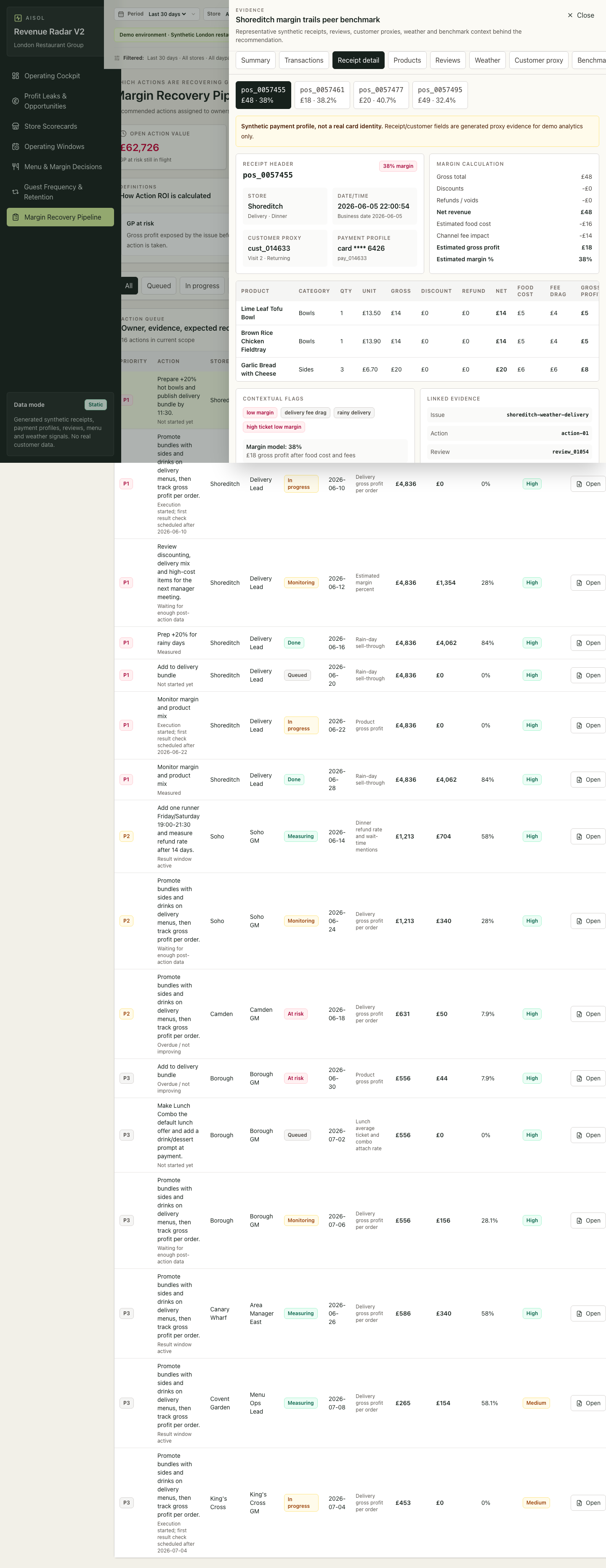
What To Notice
The demo is synthetic, but the operating pattern is the important part: ranked issues, supporting evidence, and a closed loop from signal to measurable action.
The highest-value problems rise first so leadership can focus on the next action, not every metric.
Receipts, reviews, benchmarks and operating signals sit beside the action instead of in separate tools.
Guest complaints, basket movement and refund patterns are tied back to a location and owner.
Demand context can become prep, staffing, stock or channel decisions for the next service.
Each issue has an owner, target metric, status and follow-up window for measuring impact.
The first version can use safe POS exports, menu files and review sources before deeper integrations.
Pilot
Share your location count, POS system, review sources, delivery channels and the operational metric you want to improve. The first step should not require sensitive customer data.